An Entryway That Works: Consoles, Hooks, and a Place for Keys
Shopping note: This guide links directly to retailers. We do not earn a commission from these links. Read our disclosure. This is a research-based buying guide.
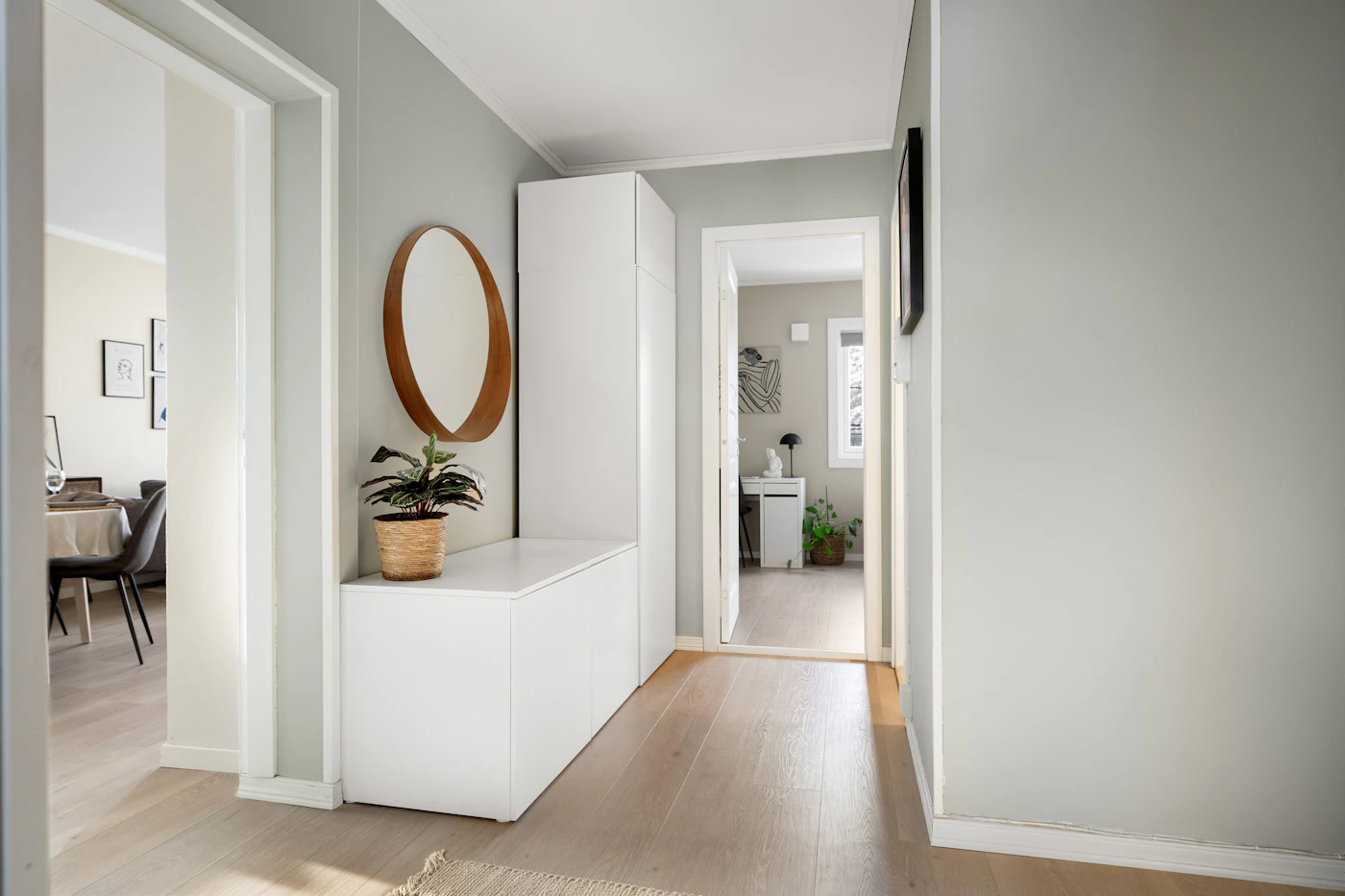
An entryway does a surprising amount of work in a small space. Keys arrive with mail, wet shoes need somewhere to pause, and a bag gets dropped while someone closes the door. A console should make those moments easier before it becomes a place for a lamp and a vase.
The buying verdict: choose the shallowest piece that comfortably holds your daily landing-zone items. Prioritize a usable drawer or well-planned shelf when small objects create clutter. In a very narrow entry, a properly installed shelf and hooks may work better than a conventional console.
Watch the doorway in use
Measure the door's swing, nearby closet doors, switches, and the route people take while carrying bags. Mark the console's full depth, including handles and any splayed legs. Check the passage at the narrowest point, not only in front of the widest wall.
Walk through with the items you usually bring home. If you have to turn sideways or lift a bag over the proposed tabletop, choose a shallower piece or another location. A console described as “slim” still needs to be compared with your actual hallway.
Pick the storage format first
| Entryway need | Strong starting point | Useful feature | Tradeoff |
|---|---|---|---|
| Keys, glasses, and incoming mail | Console with a shallow drawer | Small items stay together and out of sight | Drawers need opening clearance |
| Bags and everyday accessories | Open console with fitted baskets | Easy sorting by person or purpose | Visible baskets can overflow |
| Very narrow passage | Wall shelf with suitable hooks | Keeps furniture legs out of the route | Requires appropriate installation and wall support |
| Frequent shoe changes | Bench plus a small separate key shelf | Provides a seat and a landing spot | More than one item must fit the layout |
| Large entry with closed storage needs | Cabinet-style console | Hides bulkier items | Greater depth and door-swing requirements |
Crate & Barrel's console collection offers different widths, materials, and storage formats. Use the category to compare options, then check the individual piece's depth and interior measurements. Exterior width alone says little about usable storage.
Give the top a clear job
Reserve an obvious place for keys and another for temporary incoming items. A small tray works when its capacity reflects what you carry; an oversized tray can turn into a second drawer without a lid.
If you want a lamp, check that its base leaves enough working surface. The shade should not project awkwardly into the route or hide a switch. If an outlet is inconvenient, reconsider the lamp position before adding a cord across a passage.
A mirror can be useful for a last look before leaving, but it needs its own appropriate mounting. Do not assume the console itself can support a large leaning mirror without the securing method specified by the manufacturer.
Plan the lower half honestly
Measure baskets against the usable shelf opening, allowing for legs, crossbars, and handles. Consider what happens when the basket is full and heavy. If it is difficult to slide out, it will probably become storage for forgotten objects rather than daily essentials.
Wet footwear needs a surface and routine suited to moisture. Avoid placing it directly on a wood shelf without checking the finish and care instructions. A removable, compatible boot tray can be more practical than trying to preserve a decorative basket that was never intended for damp shoes.
For a household with many pairs, a dedicated shoe-storage plan may solve more than a larger console. Keep the console focused on what happens when you arrive and leave.
Installation and long-term care
Follow any supplied anchoring requirements and use fixings suitable for the wall. Read the load limit for wall shelves and hooks; the weight of several bags can exceed what their small appearance suggests. Do not place heavy objects on furniture purely because the surface looks substantial.
Choose a finish you can wipe according to its care instructions. Entry furniture sees frequent contact with keys, bags, and outdoor clothing. Decorative grooves and open cane panels may be attractive, but consider how they will be cleaned in that location.
Avoid the expensive detour
Do not pay for a deep statement console because the entry feels empty in a photograph. The empty space may be essential circulation. Similarly, skip elaborate organizers until you know which objects repeatedly land there. One drawer divider can be more useful than a coordinated collection of boxes.
Common questions
Should an entry console match the living-room furniture?
It can relate through a finish or shape without matching exactly. Prioritize depth and function, especially when the entry is small.
Is a drawer better than a basket?
A drawer usually suits small items that disappear easily. A basket is useful for bulkier objects, provided it can be removed comfortably and its contents stay manageable.
Can a desk work as a console?
Sometimes, but desks are often deeper than entry furniture. Measure the full footprint and check whether its height and storage suit your landing-zone routine.
Sources and shopping references
Sources checked October 9, 2026. Follow the selected furniture's installation and care instructions.
Check the details before you buy.
Compare current dimensions, materials, care instructions, and return terms at the retailer.