Shoe Storage for an Entryway That Has to Work Hard
Shopping note: This guide links directly to retailers. We do not earn a commission from these links. Read our disclosure. This is a research-based buying guide.
An entryway often needs to handle muddy sneakers, work shoes, a delivery at the door, and someone trying to leave in a hurry. A cabinet that looks beautifully slim online may still be wrong for the largest shoes in the family. Start with the pairs that actually land there each day.
Our buying verdict: use open, easy-to-clean storage for the daily rotation and move occasional shoes elsewhere. Choose a closed shoe cabinet when appearance matters and the shoes fit its internal compartments. Do not buy capacity claims without checking the footwear and wall requirements behind them.
Count pairs by use, not by ownership
Set out the shoes that are worn during a normal week. Separate tall boots, bulky athletic shoes, and small children's pairs. This gives you a more realistic footprint than the advertised number of “pairs,” which cannot reflect every size or shape.
Next, mark the entrance door's full swing, the route into the house, and any closet opening. Remember the space needed to bend down or sit while putting shoes on. A storage piece should support that movement rather than force everyone into the doorway.
Compare the main formats
| Format | Best situation | Tradeoff to plan for |
|---|---|---|
| Open rack | Shoes used daily and easy visual access | The collection remains visible |
| Tilt-out cabinet | A narrow hall where concealed storage matters | Internal dividers may limit large shoes or boots |
| Bench with lower shelf | A place to sit and a small daily rotation | The seat and shoe space need separate fit checks |
| Individual cubbies | Assigned spaces for household members | Fixed openings may waste space around small pairs |
| Removable boot tray | Wet or dirty footwear before it is stored | Needs cleaning and a place where it will not obstruct passage |
Check the details behind a slim profile
A cabinet's external depth is only part of the story. Inspect the internal compartment dimensions and whether dividers are removable. Check how far the front projects when open. A shallow closed piece may need considerably more room during use.
Measure your longest shoe from heel to toe and your tallest boot at the shaft. If a product does not publish enough information, ask the seller before purchasing. Buying several cabinets to compensate for an unsuitable compartment shape is an expensive way to discover the problem.
Look at the baseboard too. Some furniture sits against the wall differently depending on its legs or back. Follow the product's wall-attachment requirements; a slim shoe cabinet should not be treated as freely movable if its design requires anchoring.
Give wet shoes a separate landing place
Do not tuck damp shoes immediately into a crowded closed cabinet. Follow the footwear maker's drying guidance and keep moisture from accumulating against furniture. A removable tray can contain everyday drips and grit while being easier to clean than the cabinet itself.
Choose a tray with a footprint that fits the designated spot. A tall edge may help contain debris but can also get in the way if it projects into the route. Empty and clean it regularly instead of letting it become another permanent layer on the floor.
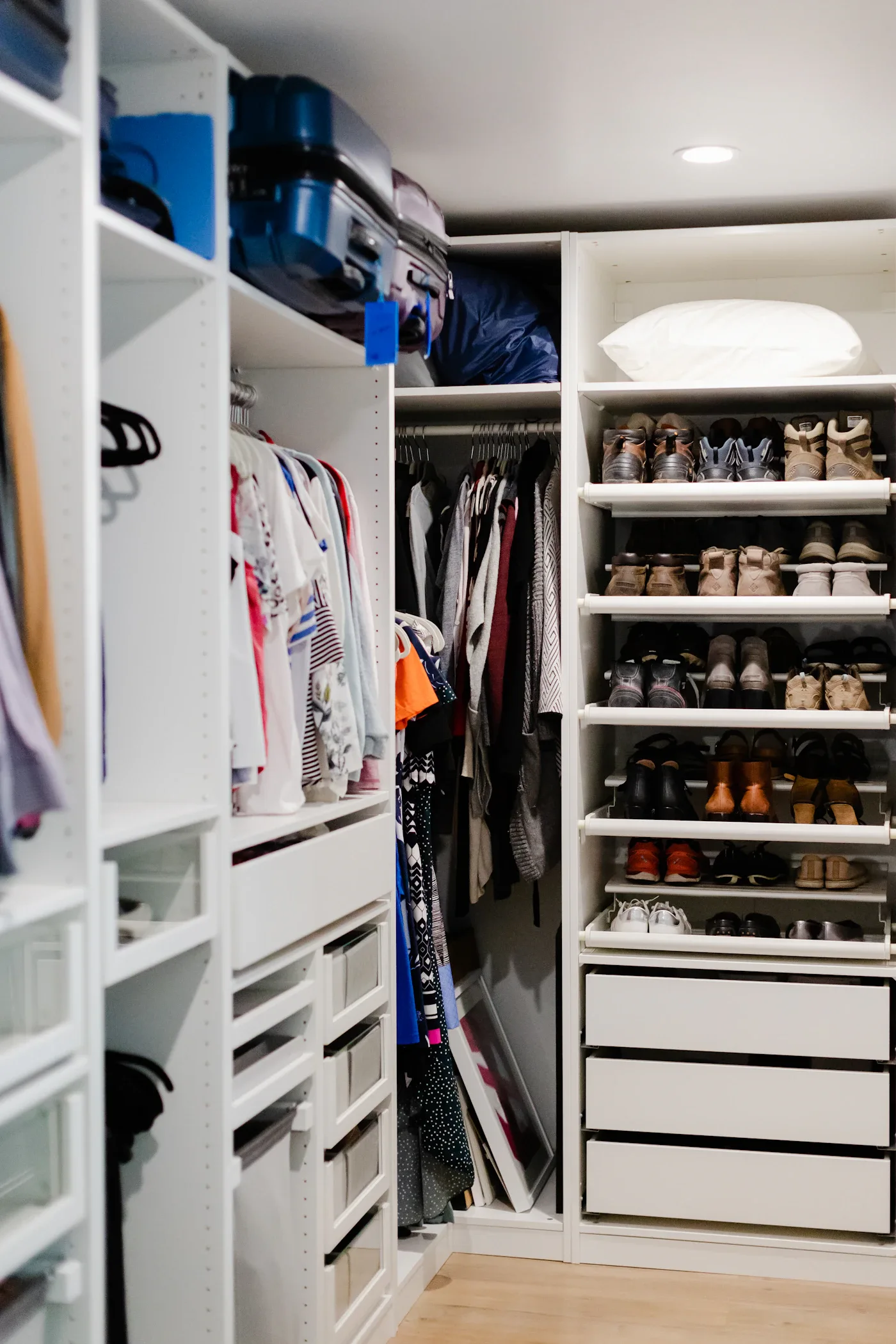
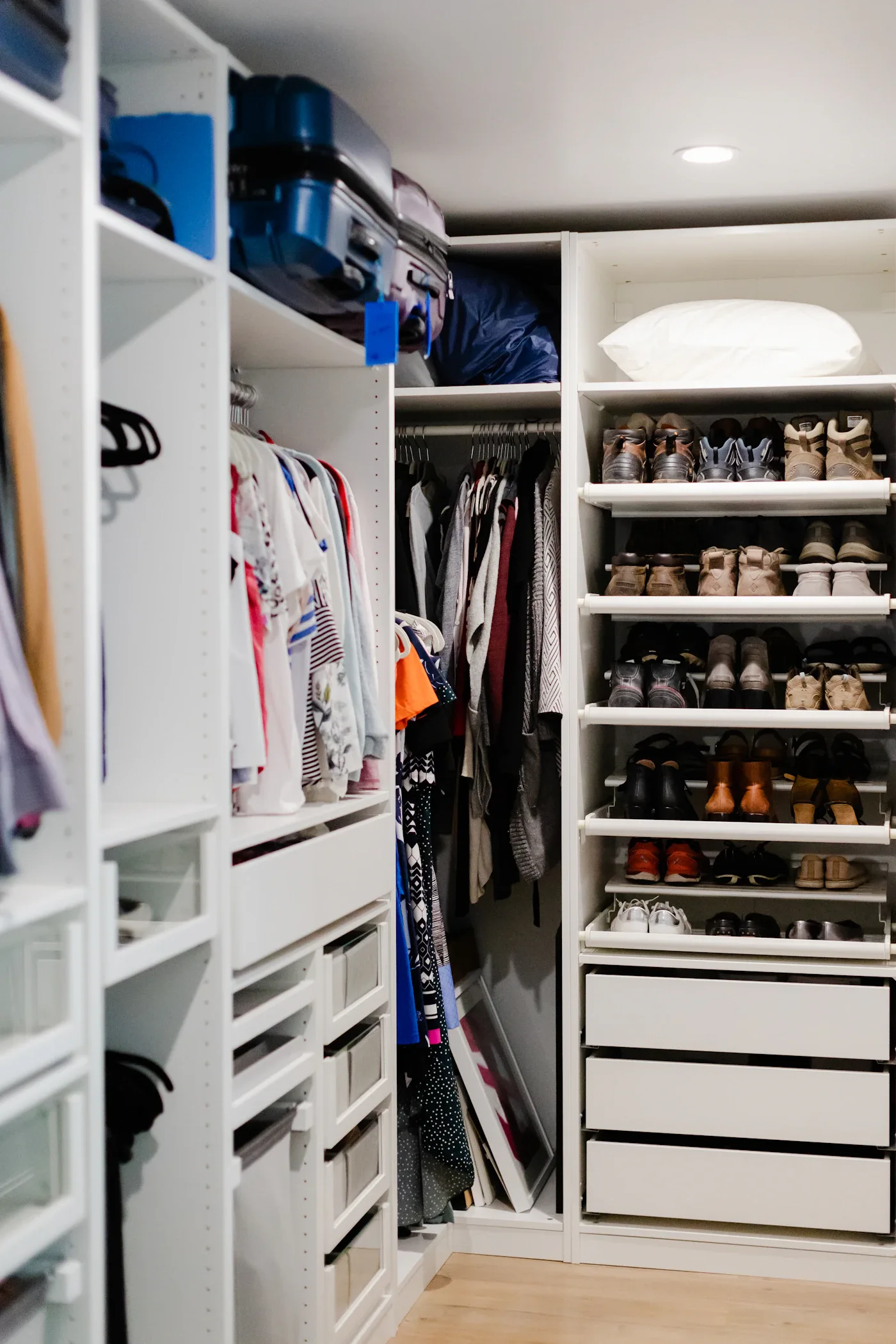
For boots, adjustable open shelving can be more practical than trying to force them into standard cubbies. Seasonal footwear that is clean and fully dry can move to a less accessible location, leaving the entrance for current use.
Make the habit easy
Children and hurried adults are more likely to use a system that can be understood at a glance. An assigned open section may work better than a sequence of doors and lids. A closed cabinet suits a household willing to open it every time shoes come off.
If you need seating, buy a bench designed for sitting and check its load information. An ordinary low cabinet is not automatically a seat. Test the height against how the intended users put on shoes, especially if balance or movement is a concern.
What not to overpay for
Skip a large matching hall set until you know which functions are missing. A rack, existing chair, and hook may solve the daily routine with less floor space than a combined unit. Decorative doors are worth paying for when they conceal a system that works; they do not improve internal fit.
Plan one location for shoe-care supplies elsewhere if the entrance is small. Leaving room for people is part of a successful storage purchase.
Common questions
Do shoe cabinets fit adult boots?
Some do, but many compartment shapes are better suited to lower footwear. Compare actual internal dimensions rather than relying on the category name.
Is open storage untidy?
It depends on the quantity and arrangement. A small visible daily rotation can look calmer than an overfilled cabinet surrounded by overflow.
Should every shoe live at the front door?
Usually there is no need. Keep the daily rotation nearby and give seasonal or occasional footwear another suitable home.
Source and shopping reference
IKEA shoe storage cabinets and individual dimensions, checked October 9, 2026. Recommendations reflect practical layout considerations rather than hands-on product tests.
Check the details before you buy.
Compare current dimensions, materials, care instructions, and return terms at the retailer.