Percale vs. Sateen Sheets: Which Feel Will You Prefer?
Shopping note: This guide links directly to retailers. We do not earn a commission from these links. Read our disclosure. This is a research-based buying guide.
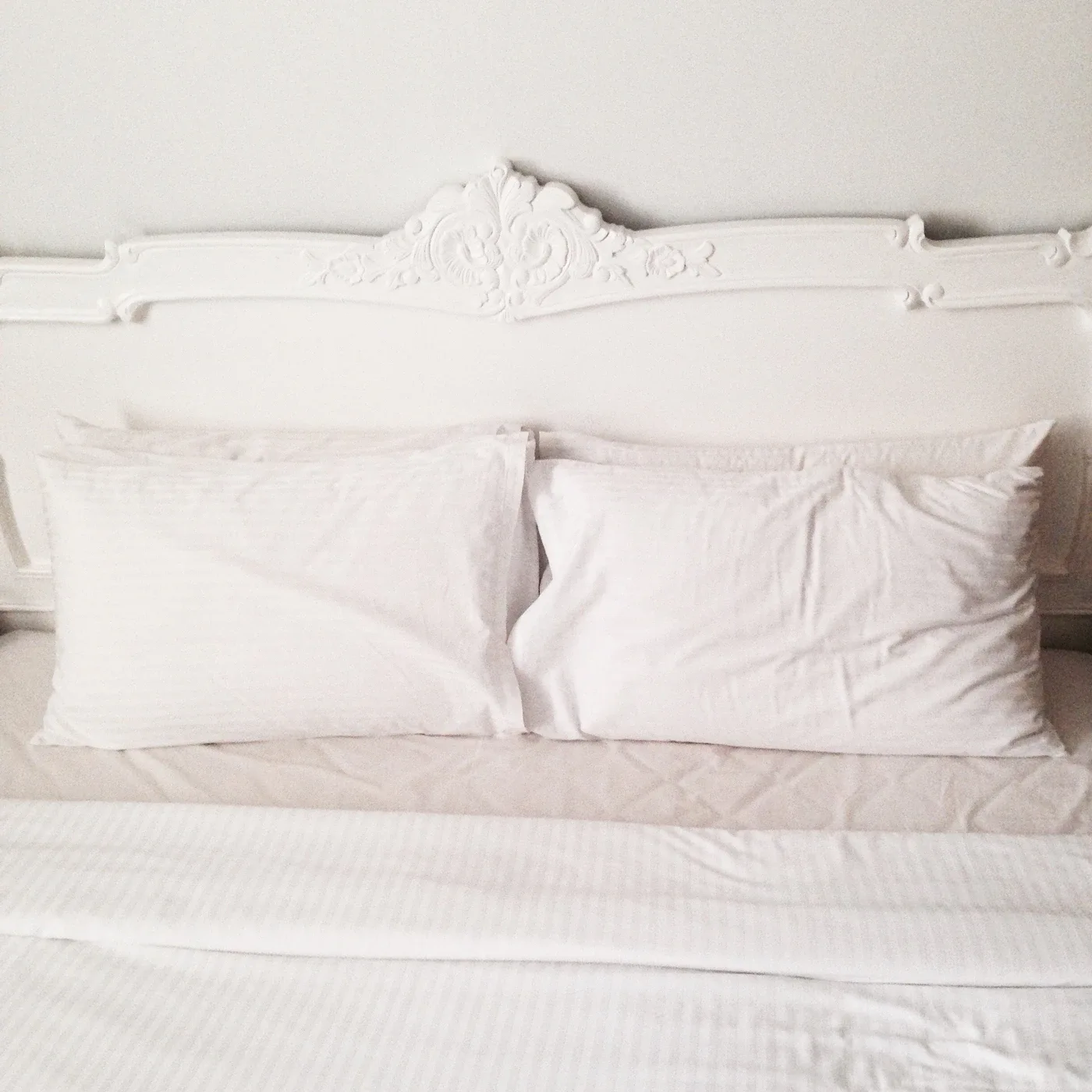
A bedroom can look exactly right and still feel wrong at bedtime. If you keep pushing away the top sheet, or miss the smooth drape of an older set, the weave deserves more attention than the color. Percale and sateen describe constructions, not competing grades of cotton.
Our buying verdict: start with cotton percale if you enjoy a crisp, matte sheet; choose cotton sateen if a smooth surface and softer drape matter more. Neither name guarantees comfort, durability, or a particular sleeping temperature. Compare the actual fabric, fit, and care instructions before buying a second set.
What the two weaves change
Brooklinen describes its percale as a one-over, one-under weave and its sateen as a four-over, one-under construction. That difference helps explain their contrasting surfaces. The brand positions percale as crisp and sateen as smoother and more lustrous. Those descriptions are useful shopping cues, although your mattress protector, duvet, room temperature, and personal preferences also shape the experience.
| Your priority | Better starting point | The tradeoff to consider |
|---|---|---|
| A dry, crisp hand and matte finish | Percale | Visible creasing may be part of the look |
| Smoothness and a fluid drape | Sateen | The surface may feel more substantial than you want |
| An informal, lightly rumpled bed | Percale | A pressed hotel finish takes additional work |
| A more polished sheen | Sateen | Shine can emphasize differences between mixed sets |
| One set for two different preferences | Try separate pillowcases first | A small fabric sample cannot predict the whole bed |
This is a comparison of typical feel, not a laboratory ranking. Two percale sets can differ noticeably, as can two sateen sets.
Fit is the purchase you cannot fix with styling
Measure from the mattress base to its finished top, including the topper you actually use. Compare that height with the fitted sheet's stated pocket depth. A label that says “deep pocket” is less useful than the measurement. Excess fabric can bunch, while a stretched corner can pull loose when you turn over.
Check what comes in the bundle. A fitted sheet, flat sheet, and pillowcases are not universal inclusions. If you do not use a top sheet, buying pieces separately may save both money and closet space. Confirm pillowcase dimensions too, particularly when choosing a king set for a bed that still has standard pillows.
Before replacing everything, inspect the sheets you already like. Read the fiber label, note the finish, and measure the pockets. “Soft” on a product page is broad; knowing you prefer a matte cotton fabric gives you a more useful starting point.
Buy one set before committing to the collection
For someone unsure about texture, the most valuable purchase detail may be the return policy. Find out whether washed bedding is eligible, whether return shipping applies, and whether sale colors have different terms. Do this before laundering, because a store's policy can change.
If two people share a bed and disagree about feel, separate pillowcases are an inexpensive way to explore the difference. They will not tell you everything about sleeping under a sheet, but they can identify a surface one person immediately dislikes.
Avoid buying an entire seasonal wardrobe of bedding on the strength of a thread-count number. A higher number alone does not establish a better match. Spend first on the right dimensions, clearly stated fiber composition, and a washing routine that fits your household. Pay extra for a particular finish only when you know you enjoy it.
Keep the care routine realistic
Follow the specific set's label rather than assuming all cotton tolerates the same wash. Leave room for bedding to move in the machine, check that it is fully dry before folding, and keep rough fasteners from snagging the surface. If creases bother you, consider how much effort you are willing to put into removing them before choosing a fabric mainly for its photograph.
Questions before checkout
Is sateen the same as satin?
No. These terms should not be used as interchangeable fiber labels. For this purchase, confirm that the listing explicitly identifies the cotton composition and sateen weave you want, rather than relying on a silky photograph.
Will percale solve sleeping hot?
It may suit your texture preference, but no sheet can guarantee that outcome. Look at the whole bed, especially heavy layers, before expecting a fabric swap to make the room feel different.
Should every bedding layer use the same weave?
There is no practical need. Choose the fabric touching your skin for comfort and the outer cover for the finish and care routine you prefer.
Sources and shopping references
References checked October 9, 2026. The recommendations above are editorial buying guidance based on published information, not hands-on testing.
Check the details before you buy.
Compare current dimensions, materials, care instructions, and return terms at the retailer.