Nightstands for Small Bedrooms: More Useful Than Bigger
Shopping note: This guide links directly to retailers. We do not earn a commission from these links. Read our disclosure. This is a research-based buying guide.
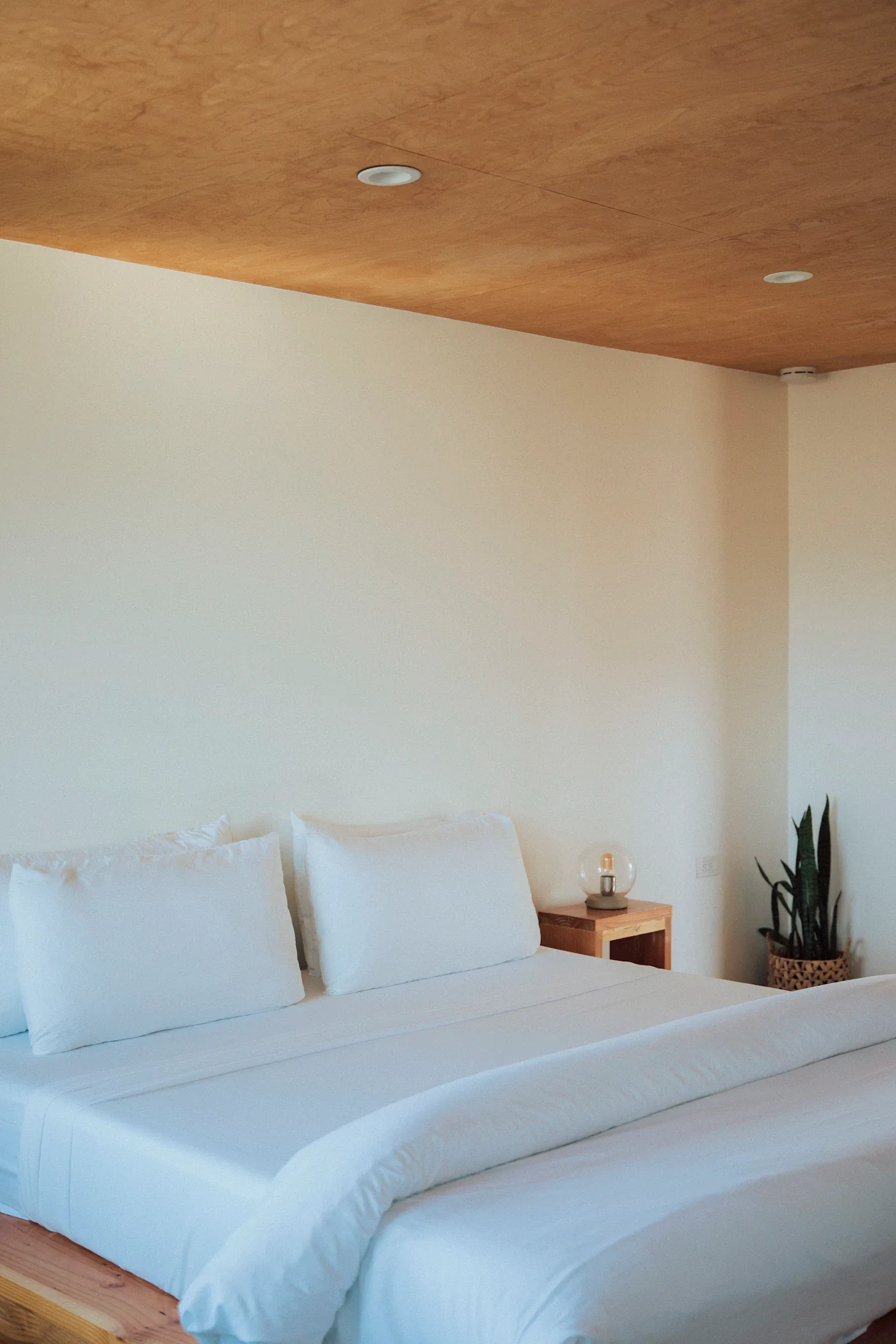
In a small bedroom, a nightstand can be narrow enough to fit and still make the room awkward. Its drawer may hit the bed, the lamp may take the entire surface, or the outlet may disappear behind a solid back. The best choice starts with your bedside routine rather than a furniture set.
Our buying verdict: choose the smallest stable surface that holds your actual essentials, with a drawer only if you need concealed storage. A shallow table with a useful top often works better than a taller stack of drawers that crowds the walkway.
Measure a three-dimensional space
Record the gap beside the bed, the mattress height, and the distance from the wall to the main walking path. Include baseboards, bed-frame projections, window trim, and door swings. A nightstand's listed width does not tell you whether its legs or handles protrude.
Use a cardboard box to approximate the size. Lie down and reach for the imagined lamp switch, water glass, and phone. Then get out of bed and walk past it. There is no single ideal height for every sleeper and mattress, but a surface near a comfortable bedside reach is easier to live with than one selected only to match the headboard.
Which format fits the job?
| Format | Best fit | Tradeoff |
|---|---|---|
| Open shelf table | Book, water, and a few visible essentials | Objects and cables stay in view |
| One drawer with an open shelf | Small private items plus a reading stack | Drawer clearance must work beside the mattress |
| Narrow closed cabinet | More concealed storage | Door swing may interfere with the bed |
| Wall-mounted bedside shelf | A clear floor and minimal belongings | Requires suitable wall installation and a checked load rating |
| Small side table | A flexible piece that can move rooms | May lack storage and the height you need |
For published dimensions and different storage arrangements, IKEA's nightstand range is a useful comparison point. Evaluate the individual product rather than assuming every item in a collection uses the same construction.
Decide what belongs beside the bed
Lay out the objects you use after getting into bed: perhaps a book, glasses, water, and a phone. Give those items room first. If a large lamp consumes most of the top, compare a smaller base or an appropriate wall light before buying a wider cabinet.
Medication should follow its storage instructions and be kept safely away from children; an ordinary drawer is not secure storage. Keep the bedside surface focused on the items that can safely live there.
For two people with different routines, matching finishes can be enough. One side might need a drawer while the other needs an open table that fits a tighter gap. A matching pair is valuable only if both pieces work.
Inspect the unglamorous details
Read assembly and wall-attachment instructions before purchase. Follow any anchoring requirements rather than assuming a low piece never needs securing. Wall-mounted designs need fixings suited to the wall and the expected load, with installation clear of concealed services.
Look at how the back meets the outlet. You need access to plugs without crushing cords between the furniture and wall. Built-in charging can be convenient, but check that the supplied connections suit your devices and can be serviced or replaced. A charging feature should not force you to keep an otherwise awkward table.
Check drawer interiors, not only exterior measurements. A narrow drawer with thick sides may hold less than expected. If buying in person, open it fully and see whether the handle is comfortable in the limited gap beside the bed.
Spend for daily use
Prioritize a stable base, a finish you can care for, and smooth storage access. Skip extra drawers if you are likely to fill them with items that belong elsewhere. Integrated lighting, elaborate hardware, and a coordinating dresser do not improve the bedside reach.
Keep a coaster available if the finish needs protection from water. Follow the maker's care instructions and check fasteners after assembly as directed. Leaving the top slightly open makes wiping it down less of a chore.
Common questions
Can a stool serve as a nightstand?
It can if the top is level, stable, and large enough for your objects. A curved seat or a top too small for the lamp is a poor compromise.
Are floating nightstands best for tiny rooms?
They clear the floor visually, but usable depth and safe installation still matter. They are not automatically the easiest choice for a renter.
Do both sides have to match?
No. Similar color or hardware can connect different pieces while allowing each side to fit its space.
Source
IKEA nightstand product listings, dimensions, and assembly resources, checked October 9, 2026. Recommendations are based on layout reasoning and published product information.
Check the details before you buy.
Compare current dimensions, materials, care instructions, and return terms at the retailer.