Dining Tables for Small Spaces: Round, Drop-Leaf, or Extendable?
Shopping note: This guide links directly to retailers. We do not earn a commission from these links. Read our disclosure. This is a research-based buying guide.
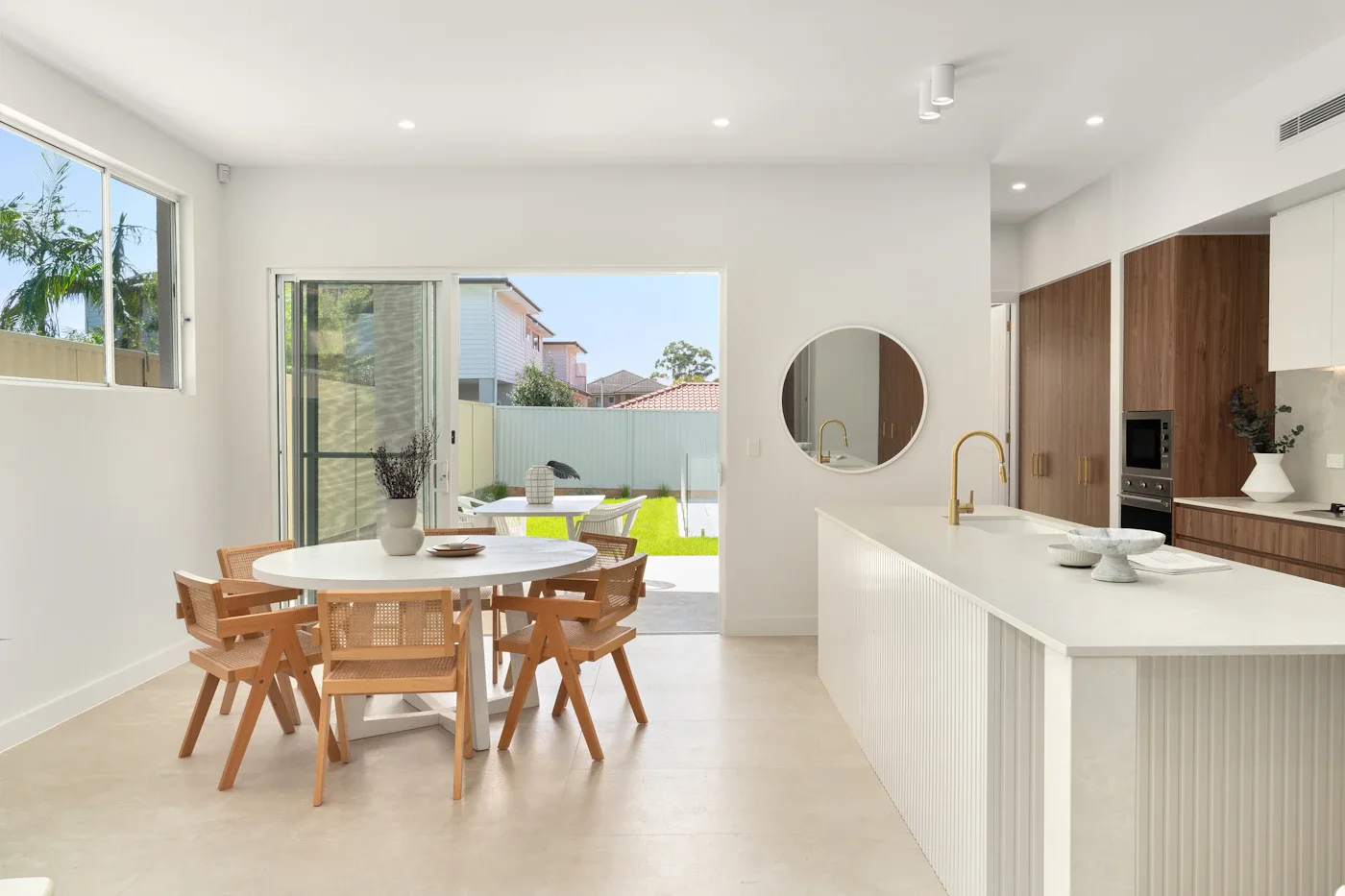
A small dining area often has to function as breakfast spot, laptop desk, and place for a friend to stay for dinner. The best table is the one that works in its normal configuration. A table with impressive guest capacity is less useful if you squeeze past it every day.
The buying verdict: choose a fixed round table for a compact, regularly used dining zone with circulation on several sides. Choose a drop-leaf design when reclaiming floor space is a real daily need. Choose an extendable table when you frequently host and can accommodate its fully opened footprint.
Measure with the chairs occupied
Start with the area available after accounting for doors, cabinets, radiators, and the main route through the room. Mark the table outline and place existing chairs around it. Pull them out as you would to sit down, then have someone walk behind.
A tabletop that fits in an empty corner may not fit with people seated. Look at the chair's total depth, back angle, and arms, as well as whether it slides under the table. An apron or low crossbar can prevent a seemingly compatible chair from tucking in.
Compare the three main approaches
| Table format | Strongest scenario | Everyday benefit | Ownership cost beyond price |
|---|---|---|---|
| Fixed round | A small group eating together regularly | No tabletop corners at the circulation points | A large diameter still occupies substantial floor area |
| Fixed rectangular | A narrow room or wall-side arrangement | Uses a linear space efficiently | End seats may compete with the walking route |
| Drop-leaf | One or two everyday users who often need floor space back | Changes footprint without storing separate leaves | Supports and folded leaves can affect legroom |
| Extendable | Frequent meals with extra guests | More capacity when required | Needs opening room and possibly leaf storage |
| Gateleg | A multipurpose room with a deliberately flexible setup | Can fold into a compact form | Moving legs and chair positions require a practical trial |
IKEA's extendable-table collection describes different extension formats, including drop-leaf and gateleg designs. Check the dimensions and mechanism of the exact model; similar closed sizes can open into very different shapes.
Round is useful, but not magic
A round table can make movement around a corner feel less abrupt. It also keeps everyone facing the group. However, its maximum width exists in more than one direction, so it may use a narrow room less efficiently than a rectangle.
Look closely at the base. A pedestal can offer different chair-placement options from four legs, but its foot shape and diameter still affect where people put their feet. A sculptural base may look compact from above while occupying useful space underneath.
Set out your usual plates and glasses on a comparable surface. A table that accommodates the chairs may still feel crowded once serving bowls or a laptop share the top.
Test every version of a flexible table
For a drop-leaf table, check the fully open, partly open, and closed dimensions. Imagine the chair positions in each configuration. If one leaf will usually stay down against a wall, verify that the remaining usable surface and supports work for daily meals.
For an extendable table, ask where loose leaves are stored and whether the mechanism can be operated comfortably by the people who will use it. A table advertised for occasional hosting still needs a place for extra chairs.
Do not assume an extension can overhang into a walkway simply because it is temporary. Map the hosting layout, including access to the kitchen and the route guests use to leave the table.
Surface and maintenance choices
Read the finish's care instructions with your mixed uses in mind. If the table doubles as a desk or craft surface, plan appropriate protection without trapping moisture or using incompatible materials. Follow the maker's advice about heat, spills, and cleaners.
Consider how joins and extension seams will be cleaned. If children use the table for drawing or the household eats several meals there daily, simple accessible surfaces may be more practical than elaborate details.
Where to spend
Prioritize a comfortable fit, a stable structure, and a mechanism you will actually use. Do not pay for the largest possible guest capacity when those gatherings are rare. A smaller daily table and another occasional hosting arrangement may suit the room better.
Check chairs and dinnerware as part of the budget. Large upholstered chairs and oversized plates can make even a thoughtfully chosen table feel crowded.
Common questions
Can a dining table sit against a wall?
Yes, when the seats you need remain usable and the arrangement leaves a comfortable route. Plan where it moves for guests, if that is part of the purchase rationale.
Are benches better for saving space?
A bench may tuck under some tables, but check its length and clearance. People seated in the middle may find entry and exit less convenient than with individual chairs.
Is an extendable table worth the extra cost?
It is worthwhile when you use the extra capacity and have space for the opened table, chairs, and any stored leaves. Otherwise a well-sized fixed table is simpler.
Sources and shopping references
Source checked October 9, 2026. Layout recommendations are editorial and should be tested against your measured room.
Check the details before you buy.
Compare current dimensions, materials, care instructions, and return terms at the retailer.